September 15, 2026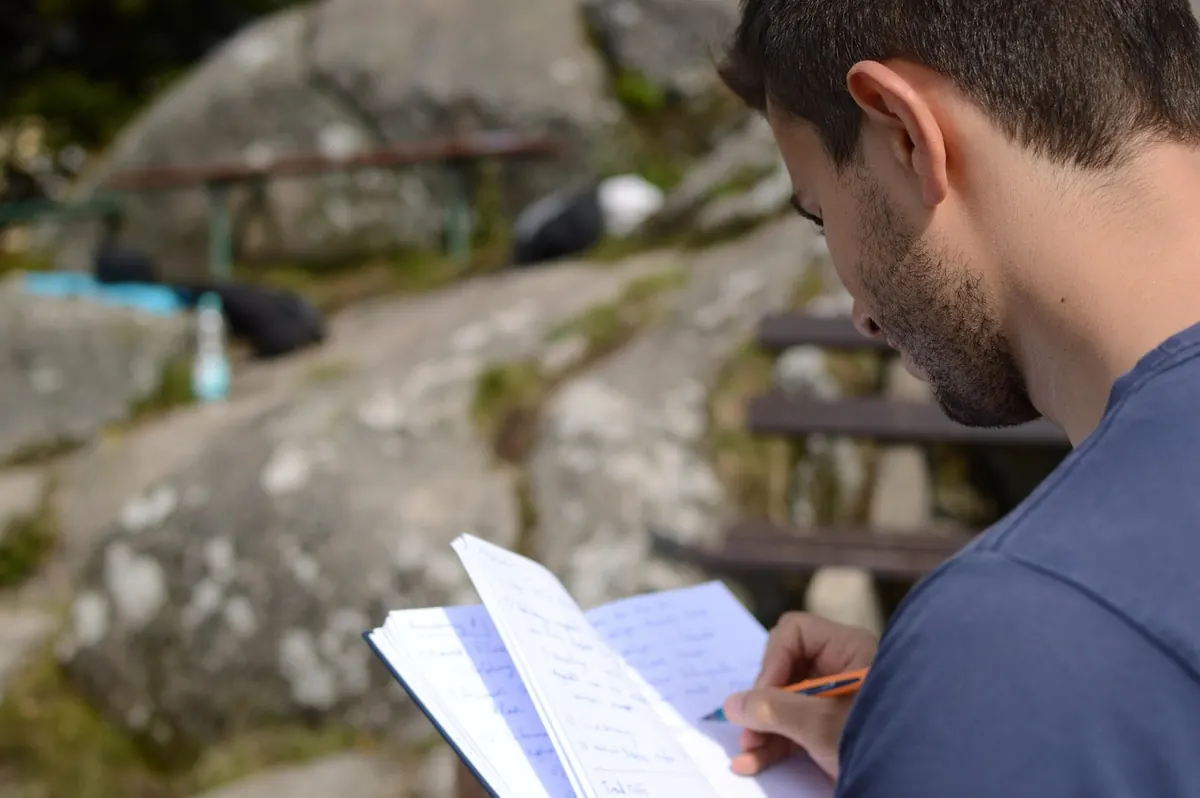
Starting a Nature Journal: A Beginner's Guide for UK Writers
A robin sings long before first light in January. By March it is a blackbird at dusk; by May the whole hedge is shouting. If you want to write about that — with detail that earns its place on the page — the work starts in a notebook, not at a keyboard.
A nature journal is a dated record of what you noticed and when. It is not a diary of feelings, though feelings creep in, and it is not only a species list, though lists help. It is raw material: the mud, the wind direction, the exact morning the swifts came back. What follows is how to begin one, keep it going through a British year, and shape it into writing someone else might publish.
Begin with one place
Pick a small patch you can reach on foot or by bus and visit it most weeks. A canal towpath. A churchyard. The scrubby end of a municipal park. One oak on a field boundary. Do not wait until you can get to a nature reserve, and do not chase rare species; they are unreliable company and thin material.
Then sit still for twenty minutes. If you feel self-conscious, treat it as a survey: walk a slow circuit, then stop and write. Record what is there before you record how it makes you feel, because the fact is harder to recover later than the feeling. A year of weekly visits to one hedge will give you far more usable writing than a dozen trips to famous places.
Choose somewhere ordinary enough that you will not be disappointed by a quiet day. A patch of wasteland behind a supermarket can be as instructive as a wood. Note the same landmarks: the broken gate, the puddle that never drains, the buddleia growing out of the wall. Over time, these become characters. You will notice the first coltsfoot on the bare verge, the day the house martins start collecting mud, the week the hawthorn leaves unfold. This is phenology — the study of seasonal timing — and it is one of the most valuable things a UK nature journal can capture.
What to take
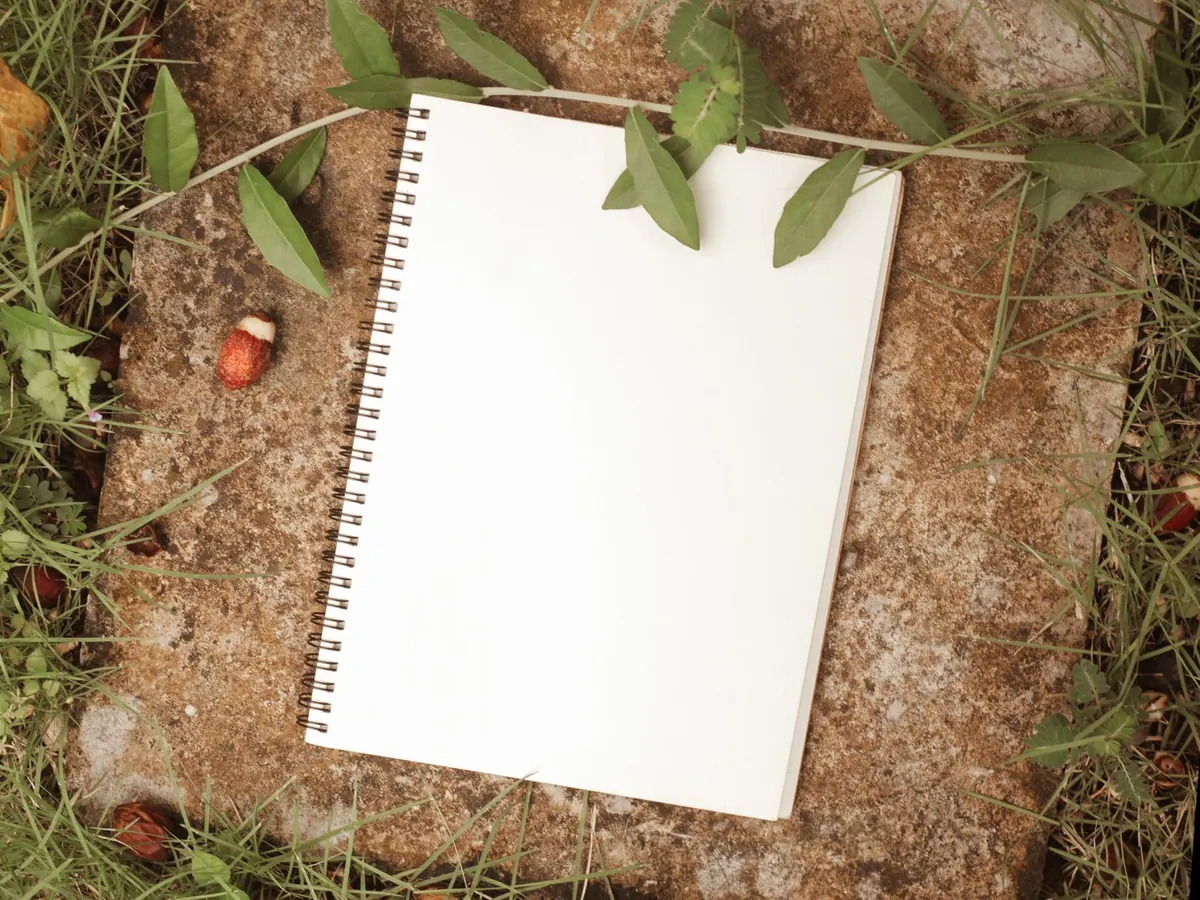
- A pocket-sized notebook with a hard cover — A6 or A5, with an elastic band. Something you can open one-handed in a wind.
- A pencil. A 2B writes on a damp page and does not smudge as badly as a ballpoint, and it keeps working when your fingers are cold. If you prefer pen, choose waterproof ink.
- A small pencil sharpener, or a craft knife if you are careful. A blunt pencil is a reason not to write.
- A phone, mainly for the time, the date, a photograph of something you cannot identify, or a voice note when your hands are too cold to write.
- A cheap hand lens or a pair of compact binoculars if you already own them. Do not let equipment become a reason to delay starting.
- A small waterproof bag or drybag for the notebook. British weather is not a moral test; it is a practical problem.
You do not need a fancy field journal, watercolour set, or matching pen. The best notebook is the one you are willing to get muddy. If you are worried about ruining a beautiful object, you will leave it at home.
What to write — and what to leave out
Start every entry with the date, time, place, and weather. Add wind direction if you can. These plain facts turn a collection of observations into a data set. They let you compare years, and they give editors and readers the confidence that you were really there.
Then write what you actually perceived, not what you think a nature writer should say. Avoid "beautiful birdsong" and "lovely sunset." Instead, try: a wren ticking from the bramble, three notes, then silence; a song thrush repeating each phrase twice from the top of the ash. Name the colour of the sky if you can: slate, pewter, apricot. Note the direction of the wind on your cheek. Describe the sound of a pigeon's wings — a clatter, a flap, a whistle. These details are the difference between a journal and a greeting card.
Prompts for a blank page
- What is the first sound I can hear? The furthest? The quietest?
- What has changed since my last visit — leaf, bud, water level, light?
- What is moving, and what is still?
- What smells of soil, rain, leaf mould, or cut grass?
- What did I almost miss?
- What am I uncertain about? Write "probable" or "possible" rather than guessing.
Here is a sample entry, deliberately unpolished:
14 March, 6.50 a.m. Canal towpath, bridge to lock. Still, mild, cloud cover 8/8. Blackbird singing from the hawthorn on the far bank. Two moorhens squabbling. First chiffchaff of the year — singing from the willows by the gate, a two-note see-saw, not the full song. Catkins out. Water level high after yesterday's rain. No swifts, of course. A heron lifted off at 7.05 and flew west.
That entry contains no fine writing. It does not need to. It contains a date, a place, a first arrival, a comparison with yesterday, and a precise sound. In six months, it will be gold.
Keeping it going through a British year
The British year gives you a structure whether you plan one or not. Winter is not empty. It is the best time to see the shape of things: nests, tree skeletons, tracks in frost or mud, the green of ivy, the red of berries. January is for robins, long-tailed tits, and the first hazel catkins. February can bring snowdrops, frogspawn, and the drumming of a great spotted woodpecker.
Spring arrives in stutters. A warm week brings out brimstone butterflies and bumblebees, then a cold snap silences everything. Note the stutters. Write down the first swallow, the first swift, the first cuckoo if you are lucky. Do not rely on memory; the whole point is that you will not remember the exact day. By May, the hedge is shouting, as the opening says, and your notebook should be full of leaf burst, nesting activity, and cow parsley along the verge.
Summer is for early mornings and late evenings. The middle of the day is often quiet, so go at dawn or dusk. Listen for the purring of turtle doves if you are in the right county, the screech of swifts, the plop of a water vole. Autumn brings migration, fungi, and the slow turning of the leaves. Record the last swift, the first redwing, the first fieldfare. These last dates are as valuable as first dates.
The secret to keeping going is lowering the bar. A three-line entry is enough. If you miss a week, go back the next week. Do not try to catch up with a month of imaginary observations. The journal is not a school exercise; it is a tool.
From notebook to publishable writing
After a season or two, read back through your entries. Do not read them as a diarist, looking for your old self. Read them as a writer, looking for patterns. Which days have energy? Which details keep returning? Maybe you have written about water levels six times, or the same heron, or the way the light hits the church tower in October. That repetition is not a failure. It is a subject.
When you draft an essay, use the journal as a quarry. Pull out the exact facts: the date the swifts returned, the temperature, the name of the pub beyond the hedge. Then shape a scene. Start in the middle of an action, not with a general statement about nature. Let the reader stand beside you. You can add research later — the Latin name, the lifecycle, the conservation status — but do not let it smother the observation. The journal gives you the authority to write about a place because you were there, repeatedly, in all weathers.
Finally, be honest about uncertainty. If you did not identify the warbler, say "a warbler, probably chiffchaff." That honesty is more convincing than false confidence.
Ethics and accuracy
A nature journal is a record, but it is also a relationship. Keep to paths where they exist. Do not trample bluebells for a photograph. Do not disturb nests, roosts, or hibernating animals. If you are writing for publication, avoid giving precise locations for rare species, especially schedule 1 birds or vulnerable plants. Use a general place name instead. The wildlife matters more than the byline.
Accuracy matters too. Carry a field guide or use a reputable app, but treat identifications as provisional until you have checked. Write down what you saw, not what you hoped to see. A journal full of mistakes is still useful if it is honest; a journal full of invented certainties is not.
Start this week
You do not need a resolution, a new camera, or a course. You need a notebook, a pencil, and one ordinary place. Go this week. Sit for twenty minutes. Write the date, the weather, and one thing you can hear. Then go back next week. By the time the swifts leave, you will have a season. By the time they return, you will have a year. And somewhere in those pages, a piece of writing will be waiting — muddy, specific, and true.
Photo: OrcaTec / Pixabay